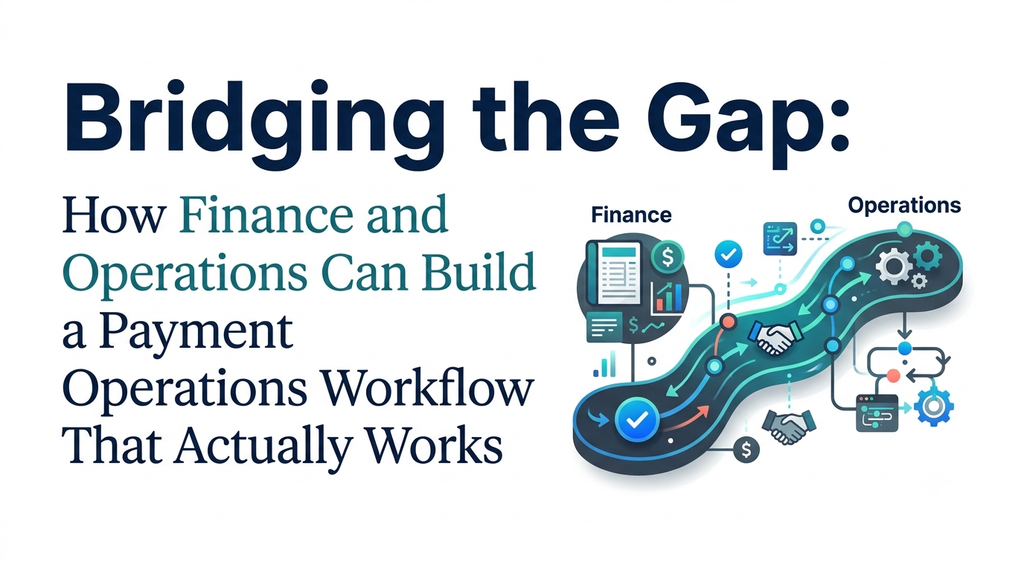
Bridging the Gap: How Finance and Operations Can Build a Payment Operations Workflow That Actually Works
A supplier sends a revised invoice two hours before a scheduled payout run. Operations knows the shipment arrived short on one line item. Finance only sees a total that matches the purchase order at a glance and approves the batch out of habit.
Three weeks later, someone has to untangle a credit memo, a partial delivery log, and a bank statement line that never quite matched.
When companies grow past a handful of monthly transactions, payment friction rarely starts inside a spreadsheet. It starts between two teams looking at the same event from different angles. Operations tracks whether work happened, goods landed, or services were delivered. Finance tracks budget rules, tax accuracy, approval limits, and cash position.
A strong payment operations workflow connects those two realities before money leaves the account or settles into the ledger. Instead of passing emails back and forth at the eleventh hour, both teams agree on who owns each check, what triggers an escalation, and how mismatches get resolved.
Why Finance and Operations Often Pull in Different Directions
Friction between finance and operations usually comes from competing priorities rather than bad intentions. Both sides are trying to protect the business, just against different risks.
Operations teams move at the speed of execution. A warehouse supervisor needs freight paid so carriers keep showing up. A marketing lead needs a contractor settled so a campaign stays on schedule. To operations, slow payment approvals look like a bottleneck that stalls real work.
Finance teams guard controls and auditability. A controller or accounts payable lead has to verify vendor bank details, enforce spending thresholds, watch for duplicate charges, and keep month-end close clean. To finance, rushing a payment through without proof looks like an invitation to errors or fraud.
Without a shared payment operations workflow, the gap between those priorities widens:
- Incomplete context at approval time: Approvers sign off on amounts without seeing delivery receipts, scope sign-offs, or contract terms.
- Unclear ownership during disputes: Finance asks operations why a charge looks off; operations assumes finance already verified it against the agreement.
- Last-minute batch scrambles: Urgent requests bypass standard checks because there is no fast-track lane with clear guardrails.
- Painful month-end reconciliation: Unmatched fees, partial settlements, and manual adjustments pile up at the end of the month.
Four Stages of a Connected Workflow
Designing a cross-functional workflow works best when you map how a transaction moves from initial request to final ledger entry, assigning clear responsibility at each stage.
1. Intake and Verification Before Commitment
Good payment control starts before an invoice arrives. Purchase requests, work orders, or service agreements should capture the basic facts operations will later need to confirm delivery: what is being bought, how much, under what terms, and which budget or cost center owns it.
When a bill or payment request comes in, the system or checklist should tie it back to that original authorization. If operations never logged receipt of goods or completion of milestones, the payment should pause early rather than becoming a surprise later.
2. Tiered Approvals Based on Risk and Amount
Not every payment deserves the same review path. Routing a $150 routine supply charge through three executive sign-offs slows everyone down and trains people to rubber-stamp approvals. Routing a $25,000 change order through a single junior reviewer creates exposure.
A practical payment approval workflow sets clear rules around dollar thresholds, vendor risk, and non-standard terms. Routine, pre-approved recurring items can follow a streamlined path once verified, while new vendors, bank detail changes, or high-value payouts require dual review or higher-level sign-off.
3. Execution, Settlement, and Exception Handling
Once approved, the payment moves into execution—whether via ACH, wire, card, or another payout rail. In real life, execution rarely goes one hundred percent smoothly. Payments get rejected, bank details turn out to be outdated, exchange rates or fees shift, or a partial shipment forces a split adjustment.
Your exception handling in payments should define a clear owner and timeline for each type of snag. If a payout fails or a vendor disputes an amount, who contacts the vendor, who updates the record, and when does the item get re-queued? Leaving exceptions in an unmonitored inbox is how small hiccups turn into late fees or strained vendor relationships.
4. Reconciliation That Closes the Loop
A workflow is not finished when money is sent or received; it is finished when the operational record, payment confirmation, and accounting ledger agree.
A reliable payment reconciliation process matches three things: what was expected (order, invoice, or billing schedule), what actually moved (bank or payment processor settlement), and how it was recorded in the books. When operations feeds clean receiving and fulfillment data into this loop, finance spends far less time chasing down mysterious variances during close.
Where Finance and Operations Should Own Different Steps
Clarity beats overlap. When both teams know their exact lane, handoffs happen faster and fewer details slip through cracks.
| Workflow Stage | Operations Ownership | Finance Ownership | Shared Touchpoint |
| Pre-spend setup | Define scope, quantities, and delivery expectations | Set budget rules, tax checks, and vendor onboarding standards | Aligning purchase terms before work starts |
| Receipt & billing check | Confirm goods arrived or milestones were met | Match invoice figures, tax, and payment terms | Resolving quantity or pricing variances |
| Approval routing | Flag operational urgency or contract exceptions | Enforce dollar limits, segregation of duties, and policy rules | Escalating high-value or unusual requests |
| Payout & exceptions | Provide operational context when a vendor raises an issue | Execute payment, track rejections, and manage bank changes | Re-approving adjusted amounts after a snag |
| Reconciliation | Supply updated fulfillment, return, or credit records | Match settlements to ledger entries and close periods | Investigating unmatched items before month-end |
Practical Guardrails to Roll Out Without Slowing Teams Down
Trying to overhaul every payment rule at once often backfires. Teams revert to side channels when a new process feels heavy. Start with a few focused guardrails that solve your biggest recurring headaches.
- Define an “urgent payment” rule in advance: Every fast-track request should still require basic verification and a documented reason. Speed without a minimum check creates avoidable mistakes.
- Standardize how changes are communicated: Require written confirmation—such as a credit memo, revised invoice, or signed change order—before adjusting a payment amount. Verbal promises rarely survive an audit.
- Hold a short monthly exception review: Spend 20 minutes each month reviewing repeated mismatches, late approvals, or stuck items. Patterns there show you which step in the workflow needs tuning.
- Keep approval authority up to date: When someone changes roles or leaves the company, update approval permissions right away so payments do not get stuck or approved by the wrong person.
What Makes a Cross-Functional Payment Workflow Last
The best payment operations workflow does not try to turn operations staff into accountants or finance staff into operations managers. It respects what each group sees best and builds a clean bridge between them.
When finance sets clear financial guardrails and operations supplies timely ground-truth confirmation, payments become calmer and more predictable. Fewer items get held up at the finish line, fewer surprises show up at month-end, and both teams spend less energy playing detective after the fact.
Frequently Asked Questions
How is a payment operations workflow different from basic accounts payable?
Basic accounts payable workflow steps focus mainly on receiving invoices, getting approvals, and paying bills on time. A payment operations workflow takes a wider view across both inbound and outbound money movement, tying operational events like delivery confirmation, order changes, exceptions, and reconciliation into how payments are controlled and tracked.
What is the biggest mistake companies make when designing this workflow?
Designing approval steps around org charts alone instead of actual risk and operational verification is a common trap. If approvers cannot tell whether work was actually delivered or if a small routine payment takes days to clear, people look for workarounds outside the workflow.
How should teams handle partial deliveries or disputed invoices?
Agree on a standard rule before disputes happen: hold only the disputed portion when possible, document the exact reason (such as short quantity or damaged goods), and tie release of the remaining balance to a formal credit memo or updated invoice.
How often should finance and operations review their workflow rules?
Reviewing thresholds, approval owners, and recurring exceptions once a quarter—or whenever transaction volume, headcount, or payment methods change noticeably—keeps the process aligned with how the business actually operates.
Conclusion
Building a dependable payment operations workflow across finance and operations comes down to shared visibility and clear handoffs rather than heavy bureaucracy. When operations confirms what actually happened on the ground and finance enforces clear spending rules, approvals, and reconciliation checks, money moves with fewer delays and far fewer end-of-month surprises.
Start by mapping where handoffs currently break down—whether that is unverified deliveries, unclear exception owners, or mismatched settlement records. Put simple guardrails around those exact spots first, keep approval authority current as teams shift, and treat finance and operations alignment as an ongoing habit that grows cleanly alongside your business.
Try it on your own invoices
Create GST invoices, share secure links and PDFs, and collect via Paytm payment links, UPI or bank transfer with PayManagerPro.